Halloween Seamless Patterns 76: A Practical Resource for Seasonal Design Work
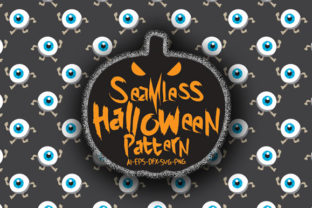
Halloween Seamless Patterns 76 is a curated, production-ready collection of repeating vector-based motifs designed specifically for seasonal creative projects. Unlike generic clipart or low-resolution web graphics, this set delivers consistent, scalable, and technically sound seamless textures—each built to tile without visible seams across any surface or medium. It’s not a novelty download; it’s a working design asset intended for professionals who need reliable, on-brand Halloween visuals without rebuilding from scratch.
What You Actually Get—and Why Format Variety Matters
The package includes five native file formats: SVG, DXF, AI, PNG, and EPS. That combination reflects thoughtful preparation for real-world use cases. SVG supports responsive web backgrounds and interactive elements. AI and EPS files preserve layers, paths, and editable vectors—essential for designers adjusting color palettes or isolating elements for print production. DXF ensures compatibility with laser cutters and CNC machines, making it viable for physical product prototyping like custom signage or fabric stencils. PNG offers high-res raster output (with transparent background) for quick mockups, social media banners, or digital presentations where vector editing isn’t needed.
This multi-format approach avoids workflow bottlenecks. A textile designer can import the AI file into Adobe Illustrator, recolor individual glyphs, and export directly to a weaving software. A small-batch stationery maker might open the DXF in LightBurn to etch pumpkin motifs onto wooden gift tags. A blogger building a themed landing page can drop the SVG into CSS as a background image and apply subtle opacity or blend modes—no pixelation, no loading lag.
Design Integrity and Technical Execution
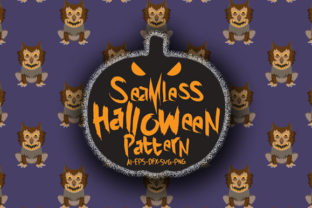
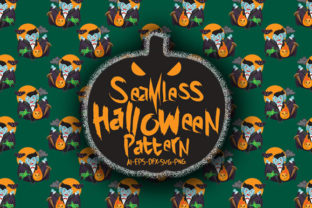
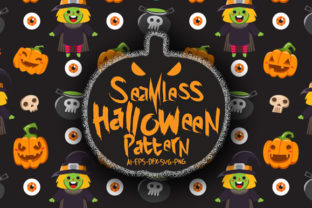
The patterns in Halloween Seamless Patterns 76 avoid visual clutter while maintaining thematic clarity. Motifs include stylized bats, jack-o’-lanterns, cobwebs, cauldrons, and abstract swirls—all drawn with balanced negative space and uniform stroke weights. There are no photorealistic elements or over-rendered shadows that would break tiling logic. Instead, each pattern uses deliberate alignment, consistent spacing, and mathematically verified repeat units. Tested at 300 DPI across 24-inch swatches, none revealed misaligned edges or inconsistent density—a common failure point in amateur seamless assets.
Color treatment is neutral by default: black, deep orange, charcoal, and off-white. This allows straightforward recoloring in vector editors without needing to rework gradients or transparency stacks. No embedded raster effects or ungrouped clipping masks complicate editing—everything remains editable and predictable.
Where It Fits Into Real Projects
Halloween Seamless Patterns 76 performs best when integrated early in a project’s asset pipeline—not as an afterthought, but as foundational texture. For example:
- A boutique candle brand launching limited-edition autumn scents used one of the patterns as a foil-stamped motif on kraft paper labels. The AI file scaled cleanly to 8 mm height without aliasing, and the crisp linework held up during blind debossing.
- An interior designer applied a scaled-down version as a subtle wallpaper repeat behind a mantel display. Because the pattern is truly seamless—not just “good enough” at desktop resolution—it remained cohesive even when viewed up close on matte-finish vinyl.
- A freelance educator creating printable classroom resources imported the PNG into Canva, adjusted brightness for better projector visibility, and layered it beneath activity instructions. The transparency preserved readability while adding seasonal context without distraction.
It’s less suited for highly illustrative or narrative-driven contexts—think storybook illustrations or animated explainer videos—where custom-drawn, non-repeating compositions are more effective. Similarly, brands with strict accessibility guidelines should verify contrast ratios when applying dark-on-dark variants, as the base palette assumes standard viewing conditions.
Usability Across Skill Levels and Tools
Beginner users benefit from the included PNG and SVG files—both require minimal technical knowledge to implement. Drag-and-drop into most website builders, Canva, or PowerPoint works reliably. More advanced users gain flexibility from the AI and EPS versions: global color replacement, path manipulation, or integration with Pantone libraries for precise brand matching. Even those using Affinity Designer or Inkscape can open the SVG or EPS with full fidelity.
The DXF format adds unexpected utility beyond crafters. One small business owner repurposed a cobweb pattern as a ventilation cutout template for a custom Halloween-themed HVAC cover—imported directly into Fusion 360, then sent to a local metal shop. That kind of cross-domain reuse underscores how well-structured vector geometry expands practical application far beyond initial expectations.
Long-Term Value and Reusability
Halloween Seamless Patterns 76 holds value beyond a single season. Its clean line work and restrained iconography age well compared to trend-dependent designs—no exaggerated gradients, no dated fonts, no meme-inspired characters. With minor recoloring or cropping, elements can support adjacent themes: Dia de los Muertos (swap orange for marigold yellow), autumn harvest (introduce wheat stalks via layering), or even gothic wedding stationery (combine with serif typography and muted mauve tones).
Licensing permits commercial use across unlimited projects—no per-use fees or attribution requirements. That matters for freelancers juggling multiple clients or educators distributing materials widely. There’s no subscription lock-in or usage cap, which simplifies budgeting for seasonal campaigns year after year.
Who Benefits Most—and When to Look Elsewhere
This set serves creators who prioritize efficiency without sacrificing quality: marketing coordinators building email templates, packaging designers developing limited-run SKUs, textile artists prototyping scarf prints, or web developers styling seasonal microsites. It’s especially useful when tight deadlines, consistent branding, or multi-surface deployment (e.g., matching web, print, and physical product textures) are priorities.
It’s less ideal for teams needing extensive customization support—there’s no accompanying style guide, alternate motif variations, or animated versions. If your workflow relies heavily on Figma plugins or requires CMS-integrated pattern libraries, you’ll still need to manually adapt the assets. Likewise, if your audience expects highly original, hand-drawn aesthetics (e.g., indie children’s book publishers), these clean vector patterns may feel too polished or generic without additional layering or texture overlays.
In practice, Halloween Seamless Patterns 76 functions like a well-organized tool drawer: not flashy, but dependable. It doesn’t replace creative judgment—it removes repetitive setup so you can focus on composition, messaging, and audience resonance. Used deliberately, it saves time without diluting impact. And for professionals managing seasonal workloads across platforms, that balance of reliability and flexibility is rarely incidental—it’s the result of intentional design discipline.