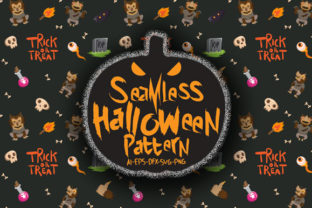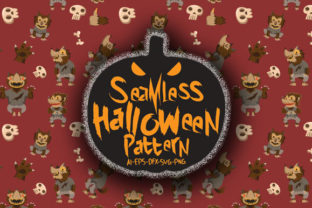
Halloween Seamless Patterns 100: A Practical Guide for Designers and Makers
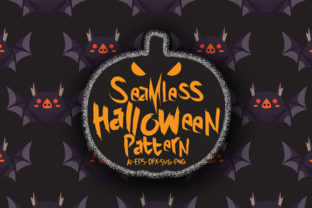
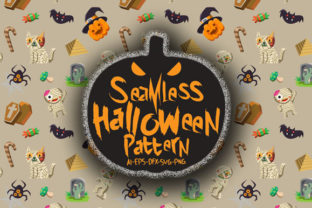
Halloween Seamless Patterns 100 is a curated collection of 100 original, tileable Halloween-themed designs—each built to repeat infinitely without visible seams. Unlike single-illustration clipart or isolated icons, these patterns are engineered for real-world application: textile printing, wallpaper production, web background layers, packaging design, and craft projects like wrapping paper or fabric-based decor. The set prioritizes versatility through format flexibility (SVG, DXF, AI, PNG, EPS) and intentional scalability—meaning vector files retain crispness at any size, while high-resolution PNGs support raster-based workflows without quality loss.
What Sets Halloween Seamless Patterns 100 Apart From Generic Halloween Graphics?
Most Halloween-themed assets fall into two categories: standalone illustrations (e.g., a single jack-o’-lantern on transparent background) or low-resolution, tiled JPEGs with obvious repetition boundaries. Halloween Seamless Patterns 100 avoids both pitfalls. Each pattern is constructed using deliberate spacing, balanced motif density, and subtle variation in element orientation or scale—techniques that reduce visual fatigue when repeated across large surfaces. For example, a “spiderweb-and-bat” pattern doesn’t place identical bats at fixed intervals; instead, it layers slightly rotated silhouettes and varied web thicknesses to mimic organic texture. This attention to tiling behavior matters most when scaling to yardage for fabric or full-wall coverage for event backdrops.
Additionally, the inclusion of five native file formats reflects an understanding of cross-disciplinary use. SVG supports responsive web backgrounds and interactive elements; DXF enables laser-cutting stencils or vinyl plotter use; AI and EPS serve professional print prepress; and PNG offers immediate drag-and-drop usability in platforms like Canva or Cricut Design Space. Not all Halloween pattern bundles offer this breadth—and fewer maintain consistent styling across all 100 entries.
How It Compares With Other Pattern Approaches
Designers evaluating Halloween Seamless Patterns 100 often consider alternatives such as custom pattern generation tools (e.g., Adobe Substance Sampler or online tiling utilities), royalty-free stock pattern libraries, or hand-drawn repeats. Each has tradeoffs:
- Algorithmic generators can produce endless variations quickly but rarely achieve cohesive seasonal tone or thematic consistency. Output may include mismatched iconography (e.g., ghosts beside candy corn) or inconsistent line weights that undermine professionalism.
- Stock pattern subscriptions offer volume and variety but often lack focused holiday relevance. A search for “Halloween pattern” on major stock sites returns many generic black-and-orange geometrics—not motifs like haunted houses, cauldrons, or vintage-style typography that reinforce seasonal context.
- Hand-drawn repeats allow full creative control but demand significant time investment per pattern. Achieving true seamlessness manually requires precise alignment, masking, and testing—especially across vector and raster outputs.
Halloween Seamless Patterns 100 sits between these options: it delivers ready-to-use cohesion without sacrificing technical readiness. It’s not generative, but it’s also not generic—it’s intentionally themed, technically vetted, and format-diverse.
Realistic Use Cases and Where It Fits Best
This collection excels where thematic continuity and production readiness intersect. Consider these practical examples:
- A small-batch apparel brand launching a limited Halloween line uses the “pumpkin vine” pattern in AI format to repeat across cotton jersey yardage—ensuring accurate color separation for screen printing.
- An event planner designing a haunted mansion photo booth backdrop imports the “vintage grimoire” seamless pattern as SVG into Figma, scales it to 12 feet wide, and overlays animated fog effects—all without pixelation or tiling artifacts.
- A stationery maker creates custom gift wrap by placing the “candy corn zigzag” pattern into a Cricut project as DXF, then cutting foil-accented paper with precise registration marks aligned to the repeat grid.
In each case, the value lies not just in the imagery—but in the assurance that the file behaves predictably across software, output methods, and physical dimensions.
Limitations and When to Look Elsewhere
Halloween Seamless Patterns 100 is purpose-built—not universal. It does not include editable source layers (e.g., layered PSD files), animation-ready sequences, or photorealistic textures (like scanned parchment or distressed burlap). If your project requires dynamic color shifting per tile, multi-layer transparency effects, or integration with 3D rendering engines, you’ll need supplemental resources.
Similarly, while the 100 patterns cover common motifs—bats, witches, moons, cobwebs, skeletons—they avoid niche subgenres like cosmic horror, steampunk Halloween, or culturally specific folklore (e.g., Día de los Muertos iconography). That focus strengthens coherence but narrows applicability for highly specialized themes.
Also note: seamless doesn’t mean “infinitely adaptable.” Some patterns rely on tight spacing or fine detail that may not translate well below 100 dpi or at extreme zoom levels in web contexts. Always test at intended output resolution—especially for digital signage or embroidery digitizing, where stitch density or pixel constraints impose hard limits.
Decision Factors: Is This the Right Resource for Your Project?
Ask yourself these questions before selecting Halloween Seamless Patterns 100:
- Do you need reliable, production-ready repeats—not just inspiration? If yes, the technical polish and format range add measurable efficiency.
- Is thematic consistency across all assets important? A unified style language (e.g., consistent linework, shared palette logic, balanced negative space) reduces design reconciliation time.
- Are you working across multiple output channels—fabric, web, print, cut files? The bundled formats eliminate conversion guesswork and compatibility hiccups.
- Do you have time to vet or adapt third-party patterns? If deadlines are tight or technical expertise varies across your team, pre-tested seamlessness lowers risk.
If most answers are “yes,” Halloween Seamless Patterns 100 likely aligns with your workflow. If your needs skew toward experimental iteration, ultra-niche symbolism, or deep customization (e.g., swapping individual glyphs within a repeating border), consider supplementing it with modular design systems—or building bespoke repeats where control outweighs speed.
Final Thoughts on Integration and Long-Term Utility
Unlike trend-driven graphics that age quickly, Halloween Seamless Patterns 100 leans into timeless visual cues—silhouettes, line art, and symbolic shapes—that remain legible across decades. Its utility isn’t tied to a single season’s aesthetic but to enduring Halloween signifiers: mystery, playfulness, and atmospheric contrast. Because the files are vector-native where appropriate, they scale cleanly for future applications—say, adapting a “ghost trail” pattern from a 2024 T-shirt design to a 2027 mural commission without reworking the base asset.
That longevity, combined with cross-platform readiness, makes Halloween Seamless Patterns 100 less of a one-off purchase and more of a foundational resource—particularly for creatives who regularly revisit holiday themes with evolving technical demands. It won’t replace conceptual development or brand-specific illustration, but it reliably handles the structural work behind repetition—freeing attention for what matters most: execution, context, and audience resonance.