16 Green Dot Patterns & Seamless Circle Backgrounds: A Creative Designer’s Essential Toolkit
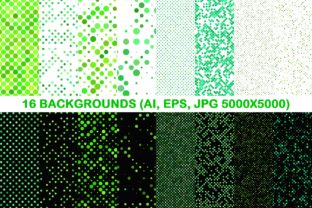
Whether you're crafting a brand identity, designing packaging, building a website, or preparing educational materials, the right background pattern can transform your project from ordinary to unforgettable. Among the most versatile and widely used design assets are green dot patterns and seamless green circle backgrounds. This article explores a premium, ready-to-use collection: 16 Green Dot Patterns and 16 seamless green circle pattern backgrounds, delivered in multiple professional formats—including vector AI and EPS files, plus high-resolution JPGs (5000×5000 pixels). We’ll break down what makes this package valuable, why green patterns matter in modern design, and how you can apply them effectively—no matter your skill level.
What Exactly Are Green Dot and Circle Patterns?
At their core, green dot patterns are repeating arrangements of circular elements—dots—spaced evenly across a canvas. When designed as seamless, these patterns tile infinitely without visible edges or breaks, making them ideal for large-scale applications like wall murals, fabric prints, or web page backgrounds. The “green” in this context isn’t limited to one shade—it spans a thoughtful spectrum: sage, mint, forest, lime, olive, and emerald tones—each chosen for visual harmony, accessibility, and emotional resonance.
Unlike random or decorative circles, these 16 patterns are intentionally crafted with consistent spacing, scalable proportions, and balanced negative space. That means whether you’re zooming in on a business card or scaling up to a trade show banner, the integrity of the design remains intact—thanks to their vector origins.
Why Choose Vector-Based Patterns? (AI + EPS + JPG Explained)
This package includes 16 vector AI files (Adobe Illustrator native format), 16 vector EPS files (cross-compatible with older design software), and 16 high-res JPGs (5000×5000 pixels, RGB, 300 DPI). Here’s why that matters:
- AI files let you edit colors, resize infinitely without pixelation, and adjust individual dots or spacing—perfect for customizing to match your brand palette.
- EPS files ensure compatibility with legacy tools, print workflows, and third-party platforms that don’t support newer AI versions.
- JPGs offer plug-and-play usability for non-designers—think Canva users, educators building slides, or marketers adding texture to social media posts.
Vector-based patterns eliminate the common frustration of blurry or distorted repeats—a pitfall of raster-only assets. They’re not just convenient; they’re future-proof.
The Power of Seamless Tiling in Real-World Design
“Seamless” isn’t just a buzzword—it’s a functional requirement. Imagine applying a background to a full-width website hero section: if the pattern doesn’t tile cleanly, you’ll see jarring seams where tiles meet. The same applies to textile design, presentation decks, app UI overlays, or even printable stationery. These 16 green circle patterns were rigorously tested for edge alignment and visual continuity—ensuring flawless repetition from left to right, top to bottom.
For example, an eco-conscious skincare brand might use a subtle mint dot pattern as a watermark behind product photography—reinforcing sustainability values without competing for attention. Or a university communications team could apply a soft sage circle motif to digital course brochures, lending cohesion across departments while evoking growth and balance.
Green in Design: Beyond Aesthetics—Meaning and Psychology
Green is more than a color choice—it’s a strategic signal. Universally associated with nature, renewal, calm, and trust, green patterns subtly reinforce themes of wellness, environmental responsibility, and stability. Research in environmental psychology shows that even abstract green motifs can lower perceived stress and increase focus—making them especially effective in educational materials, healthcare interfaces, and mindfulness apps.
Importantly, this collection avoids clichéd “leafy” or overly literal nature graphics. Instead, it embraces minimalism and abstraction—letting the clean geometry of circles and the quiet confidence of green do the work. That balance is why these patterns feel contemporary yet timeless.
Who Benefits Most From This Pattern Pack?
While designers are the obvious audience, the real strength of this collection lies in its cross-disciplinary utility:
- Graphic Designers: Integrate into branding systems, create custom swatches in Adobe CC, or build layered textures for packaging mockups.
- Educators & Trainers: Use low-contrast green patterns as gentle backgrounds for handouts, slide decks, or digital worksheets—reducing eye strain during long learning sessions.
- Small Business Owners: Apply to invoices, email headers, or Shopify store banners—adding polish without hiring a designer.
- Print-on-Demand Sellers: Scale seamlessly to fabric, mugs, notebooks, or phone cases—no risk of misaligned repeats or resolution loss.
- UX/UI Designers: Layer subtle dot patterns behind cards or modals to add depth and hierarchy—especially effective in light-mode interfaces.
Common Misconceptions About Pattern Packs
Before wrapping up, let’s clarify three frequent assumptions:
- Misconception #1: “All green patterns are interchangeable.” Not true. Spacing, dot size ratio, opacity, and hue saturation dramatically affect mood and function. A dense forest-green grid feels grounded and formal; a sparse, translucent lime dot pattern feels airy and modern. This pack offers intentional variety—not redundancy.
- Misconception #2: “JPGs are ‘enough’ for professional use.” While useful, JPGs lack editability and scalability. For print, branding guidelines, or responsive web design, vectors are essential—and this package delivers both.
- Misconception #3: “Patterns are only for decoration.” In fact, well-chosen patterns support accessibility (e.g., guiding visual flow), improve scannability (subtle texture helps separate content zones), and strengthen brand recall through consistent visual language.
Getting Started: Simple Ways to Use These Patterns Today
You don’t need advanced skills to begin. Try these beginner-friendly actions:
- In Canva: Upload any JPG, set it as a background, then adjust transparency to 5–15% for a refined overlay effect.
- In PowerPoint or Google Slides: Insert as a slide master background—apply universally across your deck with one click.
- In Adobe Photoshop: Convert the JPG to a pattern preset (Edit > Define Pattern) for quick fills on any layer.
- For Web Use: Export an SVG version from the AI file and use CSS
background-image: url(...)for crisp, lightweight tiling.
And because all 32 assets (16 dots + 16 circles) are named clearly and organized by tone and density, finding the right fit takes seconds—not hours.
Final Thoughts: Why Thoughtful Patterns Matter More Than Ever
In an age of algorithm-driven feeds and shrinking attention spans, authenticity and intentionality stand out. A carefully selected green dot pattern does more than fill space—it communicates care, clarity, and connection. It tells viewers: This was made with purpose. This supports your experience—not distract from it.
Whether you’re launching a sustainable startup, refreshing classroom resources, or building a portfolio that reflects your values, these 16 green dot patterns and 16 seamless circle backgrounds offer flexibility without compromise. They’re not just files—they’re foundational tools for thoughtful creation.
Ready to bring calm, cohesion, and quiet confidence to your next project? With professional-grade vectors, universal compatibility, and meaningful design intent, this collection bridges inspiration and execution—seamlessly.